Step Into the Spotlight: Understanding the Retro Power of Bright Elegance Font
In the ever-evolving world of graphic design, typography serves as the voice of visual communication. While clean sans-serifs and minimalist scripts have dominated the digital landscape for years, a vibrant shift is occurring. Designers and brands are increasingly looking backward to move forward, seeking typefaces that carry emotional weight and historical resonance. Enter Bright Elegance, a groovy display serif that captures a funky-and-nostalgic soul perfectly suited for the modern creative era.
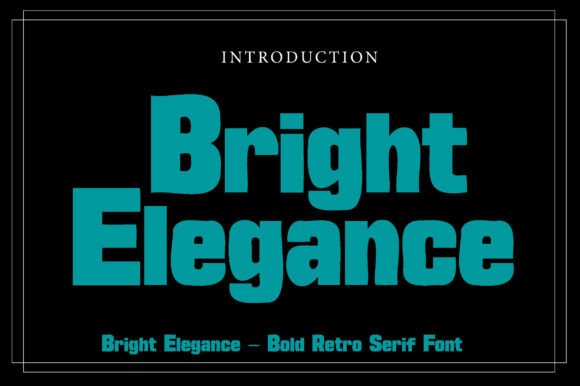
This typeface is not merely a collection of letters; it is a cultural artifact reimagined for contemporary use. With its thick, high-contrast letterforms characterized by rhythmic, exaggerated curves and soft-edged serifs, Bright Elegance channels the vibrant energy of the 1970s without feeling like a costume. For independent vintage apparel branding, retro music posters, disco-themed event identities, and high-impact social media headers, this font offers a charismatic personality that demands attention. Understanding why this specific style resonates so deeply requires exploring its anatomy, its psychological impact, and its practical applications in today’s visual economy.
The Anatomy of Groove: Defining Display Serifs
To fully appreciate Bright Elegance, one must first understand the category it inhabits. In typography, "display" fonts are designed specifically for large sizes—headlines, logos, and posters—rather than body text. They prioritize expression over extended readability. Bright Elegance takes the traditional serif structure and amplifies it through a lens of 1970s pop culture.
The defining characteristic of this typeface is its massive structural weight. Unlike the delicate hairlines of Victorian serifs or the uniform strokes of geometric sans-serifs, Bright Elegance utilizes extreme contrast. The vertical stems are bold and commanding, while the horizontal connectors and serifs maintain a softness that prevents the design from feeling aggressive. This balance is crucial. It allows the font to be loud without being abrasive, creating an inviting warmth that is essential for nostalgic branding.
The "rhythmic, exaggerated curves" mentioned in its description refer to the organic flow of the letterforms. In the 1970s, typography began to break free from the rigid grid systems of the Swiss Style. Letters began to dance, swell, and taper in ways that mimicked hand-lettering and sign painting. Bright Elegance preserves this human touch. When you set a headline in this font, the negative space between characters becomes just as active as the ink itself, creating a visual cadence that guides the eye across the page with a musical quality.
Why Nostalgia Works in Modern Branding
One might ask why a font rooted in the disco era is relevant for businesses operating in the 2020s. The answer lies in the psychology of nostalgia and the current fatigue with digital sterility. In an age of AI-generated imagery and ultra-clean user interfaces, consumers crave authenticity and tactile experiences. Vintage aesthetics signal craftsmanship, history, and human connection.
However, there is a common misunderstanding regarding retro design. Many assume that using a vintage font automatically makes a brand look outdated or kitschy. This is where Bright Elegance distinguishes itself. It does not replicate the imperfections of old printing presses; instead, it distills the spirit of the era into crisp, vector-perfect forms. It feels familiar yet fresh, allowing brands to leverage the emotional comfort of the past while maintaining professional polish.
For independent creators and small businesses, this distinction is vital. You are not trying to convince customers you are actually from 1974; you are borrowing the optimism, freedom, and boldness associated with that decade to tell a new story. Whether selling upcycled denim or promoting a modern funk band, the font acts as a bridge between heritage and innovation.
Practical Applications: Where Bright Elegance Shines
Understanding the theory behind the typeface is only half the battle. Knowing where and how to deploy it ensures your design communicates effectively. Because of its high-contrast nature and decorative details, Bright Elegance is a specialist tool, not a generalist workhorse. Here are the primary environments where this typeface excels:
- Vintage Apparel Branding: Clothing labels and hang tags rely on instant recognition. The thick letterforms of Bright Elegance remain legible even when embroidered or printed on textured fabrics, giving merchandise an authentic boutique feel.
- Retro Music Posters: Gig posters require hierarchy and excitement. This font provides the necessary volume to make band names pop against busy, illustrated backgrounds typical of psychedelic and disco art styles.
- Event Identities: For festivals, parties, or markets with a thematic focus, the font sets the mood before attendees even arrive. It appears on tickets, wristbands, and wayfinding signage to create an immersive atmosphere.
- Social Media Headers: On platforms like Instagram and TikTok, users scroll quickly. A profile header or story template utilizing Bright Elegance stops the scroll through sheer visual charisma, distinguishing content from the sea of standard sans-serif captions.
Pairing Strategies for Balanced Design
A frequent mistake beginners make is letting a display font fight for attention with other elements. Bright Elegance is the lead singer; everything else should be the backing band. To maintain clarity and professionalism, pair it with simple, neutral typefaces.
- Choose a Neutral Sans-Serif: For body copy, subheads, and fine print, select a clean grotesque or neo-grotesque sans-serif (like Helvetica, Inter, or Arial). The simplicity of these fonts highlights the ornate beauty of Bright Elegance rather than competing with it.
- Mind the Hierarchy: Reserve Bright Elegance strictly for titles, logos, and short call-to-action phrases. Never use it for paragraphs or long-form reading. Its exaggerated curves cause eye strain at small sizes and reduce comprehension.
- Color Considerations: High-contrast fonts respond beautifully to color. Warm palettes involving burnt orange, mustard yellow, and cream enhance the 70s vibe, while unexpected neon or pastel combinations can push the aesthetic toward a futuristic-retro fusion.
Navigating Accessibility and Legibility
While style is paramount for display typography, responsible design always considers accessibility. The very features that make Bright Elegance attractive—its tight spacing and dramatic weight variations—can pose challenges if mishandled.
When using this font digitally, ensure sufficient contrast ratios against the background. White text on a dark background often renders better for high-contrast serifs than black on white, as the light bleeds slightly into the thin strokes, making them appear more robust. Additionally, avoid setting this typeface in all-caps for long phrases. The rhythmic flow relies on the interplay between ascenders and descenders; removing them creates a rectangular block of text that loses the font’s inherent groove and reduces scannability.
It is also important to remember that "groovy" does not mean "messy." Professional execution involves careful kerning (adjusting space between individual letter pairs). Display fonts often require manual optical adjustments to ensure the rhythm remains consistent. Investing time in these micro-adjustments separates amateur designs from professional branding.
The Cultural Significance of Typographic Revival
Bright Elegance represents more than a trend; it signifies a broader cultural desire for joy and expressiveness in design. For decades, corporate minimalism prioritized safety and universality. While functional, this approach often stripped away personality. The resurgence of funky, nostalgic serifs indicates a market correction. Audiences are signaling that they want design to have a pulse.
For educators, students, and lifelong learners, studying typefaces like Bright Elegance offers a lesson in visual history. Typography is a mirror of society. The 1970s were a time of social liberation, musical experimentation, and breaking norms. By using this font today, designers participate in a dialogue about those values. It reminds us that design is cyclical and that looking back can provide the inspiration needed to innovate.
Ultimately, Bright Elegance is a premier choice because it solves a specific modern problem: the need for distinctiveness in a saturated market. It offers a shortcut to emotion, a vessel for storytelling, and a celebration of typographic craft. Whether you are launching a vinyl record label, designing a wedding invitation for a bohemian couple, or refreshing a lifestyle blog, stepping into the spotlight with this font ensures your message is not just seen, but felt. It transforms text from mere information into an experience, proving that even in the digital age, there is still room for a little bit of soul.